95% Policosanol vs 90% Octacosanol: What Does the Percentage Actually Measure?
A 95% Policosanol offer and a 90% Octacosanol offer may look easy to rank. They are not the same measurement. Policosanol names a mixture of long-chain primary alcohols; Octacosanol is a specific C28 alcohol. Before comparing two percentages, an ingredient buyer needs to know what was measured, how it was measured, and what counted as 100%.
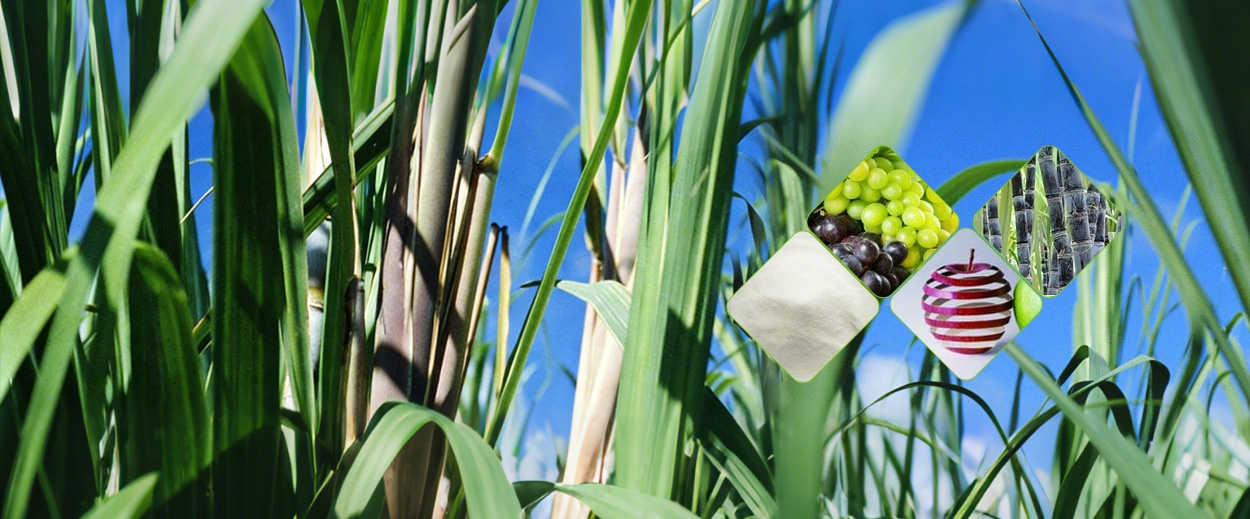
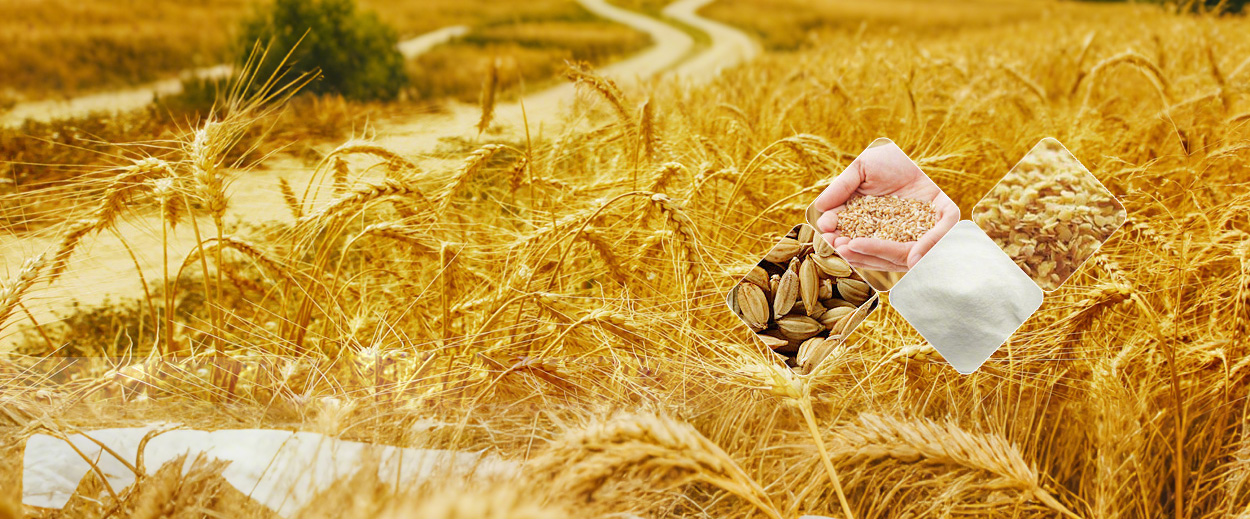
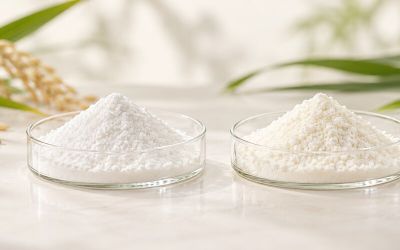
Editorial illustration. Raw-material imagery does not identify the feedstock of a particular Sifeng Bio batch.
First, name the substance behind the number
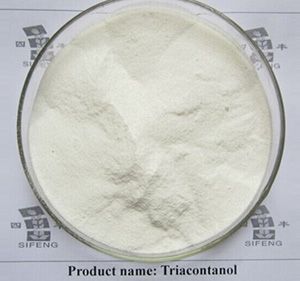
SF-001 Policosanol
Policosanol is a family of long-chain primary fatty alcohols, typically discussed through the combined assay and the relative profile of its members. The Sifeng Bio homepage lists 95%, 98% and 99% grades for SF-001. These catalogue figures do not disclose the individual C28 share or precise assay basis; confirm both against the current offer and batch COA.
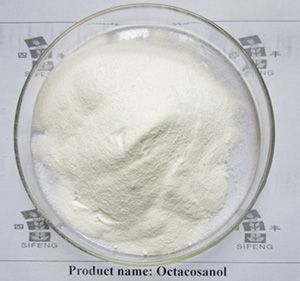
SF-002 Octacosanol
Octacosanol (CAS 557-61-9) is the individual 28-carbon primary alcohol, also called 1-octacosanol. Sifeng Bio lists SF-002 grades of 10%, 12%, 40%, 50%, 60% and 90%; its product page separately describes a GC purity range and a total-alcohol indicator. Those lines answer different analytical questions.
A percentage is incomplete until its denominator is clear
The key distinction is between how much of the defined alcohol mixture is in the material and how much of the material is the C28 molecule. A third figure, the share of a C28 peak among identified alcohol peaks, describes the mixture's profile. These values can differ without any laboratory error.
Reported line
Question it may answer
Clarify before comparing offers
Total defined alcohols
How much of the sample is the specified alcohol set?
Included chain lengths, mass basis, calibration and exclusions.
Octacosanol assay
How much of the sample is C28 alcohol?
Identity standard, GC method and whether the result is mass% or area%.
Homolog distribution
How is C28 distributed relative to C24, C26, C30 and other measured alcohols?
Which peaks form the 100% reference and how unknowns are handled.
For example, a label saying “90% Octacosanol” should not be silently read as “90% total alcohols,” or as “90% of the Policosanol mixture.” Likewise, a “95% Policosanol” listing does not disclose its C28 share. The test report must define the analyte and basis. A GC peak-area percentage also should not automatically be treated as weight percentage without a suitable quantitative method and calibration.
Editorial illustration of analytical testing, not a photograph of Sifeng Bio's facility or its actual COA.
Read the COA in a useful order
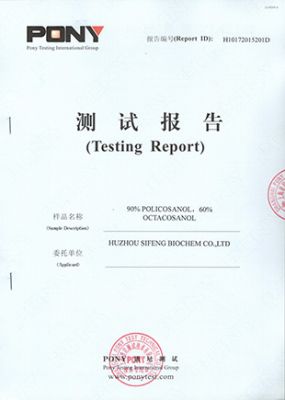
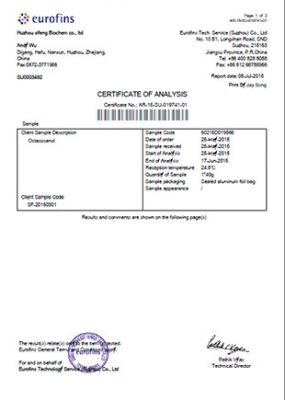
Match the product and batch. Check SF-001 Policosanol or SF-002 Octacosanol, lot number, sampling date and the corresponding specification.
Identify each assay line. Distinguish total defined alcohols, C28 content and the distribution of individual alcohols.
Read the method note. Ask for GC conditions, reference standards, calculation basis and whether each number is area% or mass%.
Review non-assay parameters. Residual solvents, moisture, heavy metals, microbiological limits and packaging can matter for the intended use.
Compare more than one lot. A single COA describes one sample; repeatability across lots is a separate procurement question.
Published analytical work on rice-bran-wax Policosanol used GC–MS for constituent identification and GC–FID with an internal standard for quantification. That is a useful illustration of why a chromatogram, calibration approach and defined sum can add meaning that a headline percentage lacks. It does not identify the method Sifeng Bio uses for any particular lot.
Choose the grade for the application, not the largest number
Ingredient development
Define the target alcohol profile before screening Policosanol lots. A stated total alone does not describe the full mixture.
Formula evaluation
When the target is C28, compare Octacosanol assay with particle properties, processing conditions and performance in the actual formulation.
Commercial supply
Align a written specification, sampling plan, analytical method and destination-market documentation before moving from samples to recurring orders.
No ingredient purity percentage, by itself, proves a finished product's efficacy, safety, regulatory status or suitability for a health claim. Those questions require separate evidence and market-specific review.
Frequently asked questions
What does 95% Policosanol mean for SF-001 Policosanol?
The Sifeng Bio homepage lists a 95% SF-001 Policosanol grade, but that label alone does not define the precise alcohol set, assay basis or C28 share. Request the current SF-001 Policosanol specification and batch COA.
Does 90% Octacosanol mean 90% total alcohols in SF-002 Octacosanol?
No such equivalence should be assumed. The SF-002 Octacosanol product page presents Octacosanol purity and total alcohol content as separate indicators; confirm the method and calculation basis on the relevant SF-002 Octacosanol COA.
Can 95% Policosanol be directly compared with 90% Octacosanol?
A 95% Policosanol listing and a 90% Octacosanol listing may describe different analytes. Compare Policosanol total-alcohol definitions and homolog profiles with Octacosanol's C28 assay only after both specifications define the percentage basis.
How are Policosanol and Octacosanol related in a GC profile?
Octacosanol is a C28 primary alcohol that may appear as one constituent in a Policosanol mixture. A GC profile can separate Octacosanol from other measured Policosanol alcohols, subject to the validated method and identification standards.
Which documents should a buyer request for SF-001 Policosanol and SF-002 Octacosanol?
For SF-001 Policosanol and SF-002 Octacosanol, request the current specification, a batch COA, assay method description, identity or homolog data, relevant contaminant limits and documentation needed for the destination market.
Does higher Octacosanol purity guarantee a better result than Policosanol?
Higher Octacosanol assay does not establish that Octacosanol is better than Policosanol for every formulation. The desired molecule or mixture, delivery system, quality requirements and actual application tests should determine the choice.
Compare a defined specification, then request a sample.
Tell HUZHOU SIFENG BIOCHEM CO., LTD which grade, assay definition, intended application, destination market and expected volume you are evaluating. Ask for the current SF-001 Policosanol or SF-002 Octacosanol documentation before making a purchasing decision.
Email: sales@sifengbio.com | Tel: +86-572-2576818 | Website: www.sifengbio.com
Sources and verification
Sifeng Bio English homepage: SF-001 and SF-002 catalogue grades
Sifeng Bio: SF-001 Policosanol product page; SF-002 Octacosanol product page
Wang et al., Journal of Agricultural and Food Chemistry (2007): extraction methods and chromatographic fingerprint of rice-bran-wax Policosanol
NIH PubChem: 1-Octacosanol identity and formula
Author statement: Prepared by HUZHOU SIFENG BIOCHEM CO., LTD for ingredient-industry communication. Company-grade references come from its public website; analytical context comes from the cited research and chemical database. The article is educational and does not claim that either ingredient treats disease or that a listed purity figure guarantees a finished-product result. Confirm current specifications, batch documents and local requirements before use.
Topics: #Policosanol #Octacosanol #FattyAlcohols #IngredientQuality #GCFID #CertificateOfAnalysis #NutraceuticalIngredients #B2BSourcing
{"@context":"https://schema.org","@graph":[{"@type":"Organization","@id":"https://www.sifengbio.com/#organization","name":"HUZHOU SIFENG BIOCHEM CO., LTD","url":"https://www.sifengbio.com/","email":"sales@sifengbio.com","telephone":"+86-572-2576818"},{"@type":"BreadcrumbList","itemListElement":[{"@type":"ListItem","position":1,"name":"Home","item":"https://www.sifengbio.com/"},{"@type":"ListItem","position":2,"name":"95% Policosanol vs 90% Octacosanol: What Does the Percentage Actually Measure?"}]},{"@type":"FAQPage","mainEntity":[{"@type":"Question","name":"What does 95% Policosanol mean for SF-001 Policosanol?","acceptedAnswer":{"@type":"Answer","text":"The Sifeng Bio homepage lists a 95% SF-001 Policosanol grade, but that label alone does not define the precise alcohol set, assay basis or C28 share. Request the current SF-001 Policosanol specification and batch COA."}},{"@type":"Question","name":"Does 90% Octacosanol mean 90% total alcohols in SF-002 Octacosanol?","acceptedAnswer":{"@type":"Answer","text":"No such equivalence should be assumed. The SF-002 Octacosanol product page presents Octacosanol purity and total alcohol content as separate indicators; confirm the method and calculation basis on the relevant SF-002 Octacosanol COA."}},{"@type":"Question","name":"Can 95% Policosanol be directly compared with 90% Octacosanol?","acceptedAnswer":{"@type":"Answer","text":"A 95% Policosanol listing and a 90% Octacosanol listing may describe different analytes. Compare Policosanol total-alcohol definitions and homolog profiles with Octacosanol's C28 assay only after both specifications define the percentage basis."}},{"@type":"Question","name":"How are Policosanol and Octacosanol related in a GC profile?","acceptedAnswer":{"@type":"Answer","text":"Octacosanol is a C28 primary alcohol that may appear as one constituent in a Policosanol mixture. A GC profile can separate Octacosanol from other measured Policosanol alcohols, subject to the validated method and identification standards."}},{"@type":"Question","name":"Which documents should a buyer request for SF-001 Policosanol and SF-002 Octacosanol?","acceptedAnswer":{"@type":"Answer","text":"For SF-001 Policosanol and SF-002 Octacosanol, request the current specification, a batch COA, assay method description, identity or homolog data, relevant contaminant limits and documentation needed for the destination market."}},{"@type":"Question","name":"Does higher Octacosanol purity guarantee a better result than Policosanol?","acceptedAnswer":{"@type":"Answer","text":"Higher Octacosanol assay does not establish that Octacosanol is better than Policosanol for every formulation. The desired molecule or mixture, delivery system, quality requirements and actual application tests should determine the choice."}}]},{"@type":"NewsArticle","headline":"95% Policosanol vs 90% Octacosanol: What Does the Percentage Actually Measure?","description":"Compare Policosanol and Octacosanol grades through assay definitions, C28 content, GC profiles and COA questions for ingredient sourcing.","image":["https://www.sifengbio.com/Public/userfiles/images/policosanol-octacosanol-grades.jpg","https://www.sifengbio.com/Public/userfiles/images/fatty-alcohol-gc-assay.jpg"],"datePublished":"2026-10-23","dateModified":"2026-10-23","inLanguage":"en","author":{"@id":"https://www.sifengbio.com/#organization"},"publisher":{"@id":"https://www.sifengbio.com/#organization"},"keywords":["Policosanol","Octacosanol","Fatty alcohols","GC-FID","COA","Ingredient sourcing"]}]}
.jpg)








.jpg)
.jpg)
.jpg)
.jpg)
.jpg)
.jpg)
.jpg)